Research
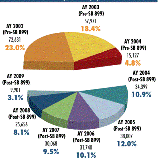
Temporary Disability Outcomes in California WC AY 2002 – 2009
New CWCI data on California workers’ comp TD claim experience since the enactment of 2004 reforms shows that average TD payments and paid TD days have increased in recent years, with average TD paid 12 months after the initial payment on AY 2009 claims nearly matching the pre-reform level noted in AY 2004, while the average paid at 24 months on AY 2008 claims exceeding the pre-reform high.
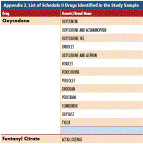
Prescribing Patterns of Schedule II Opioids Part 2: Fentanyl Prescriptions in California Workers’ Compensation
A CWCI Research Spotlight Report on the use of fentanyl – the most potent Schedule II opioid – in California workers’ comp finds that more than 1 out of every 5 injured workers who are prescribed Schedule II opioids receive fentanyl, while more than a quarter of all claimants with non-surgical medical back problems who are prescribed Schedule II opioids receive fentanyl.
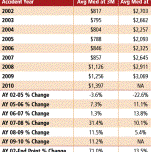
CWCI Research Documents Continuing Growth in Calif. WC Medical
A new CWCI Research Update reveals that average medical expenditures on California work injury claims continue to climb, with medical treatment, prescription/durable medical equipment (DME), medical management/cost containment and med-legal payments all trending up.
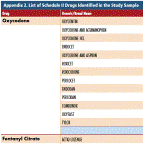
Prescribing Patterns for Schedule II Opioids in Calif. WC.
A new CWCI study on prescribing patterns for Schedule II Opioids in California workers’ compensation finds that a relatively small percentage of medical providers account for the vast majority of these narcotic prescriptions and the associated payments, and that more than half of the prescriptions are for minor back injury claims.

Public Self-Insured Claims Experience in California WC FY 1999 – 2010
California public self-insured losses continued to mount last year, despite declining claim volume, as claim severity (average loss per claim) increased for the fourth year in a row.
Percentage of Calif. WC Prescriptions Falling Outside the Medi-Cal Fee Schedule Database
A CWCI study finds that most injured worker prescriptions in California are in the Medi-Cal fee schedule database that sets maximum reasonable pharmacy fees and helps control workers’ comp costs, suggesting that other factors such as an increase in the number of scripts/claim, increases in Average Wholesale Prices used to calculate pharmacy fees, a shift toward more expensive drugs, and PBM contract rates and payments that exceed fee schedule allowances, may be responsible for recent growth in prescription drug costs.