Research
CWCI Estimates California WC Spinal Implant Pass-Through Payments Hit $67.5 Million in 2010
Duplicate payments to hospitals allowed by the California Workers' Compensation Official Medical Fee Schedule for implantable hardware used in spinal surgery added an average of $20,137 in fees to more than 3,350 work injury claims in 2010, boosting workers' compensation medical costs by nearly $67.5 million
ICIS Injury Score Card: Head and Spinal Injury without Spinal Cord Involvement
The latest CWCI Injury Score Card examines head and spinal injuries without spinal cord involvement, which comprise only a small percentage of claims, but account for only a small percentage of California workers' compensation claims, but a disproportionate share of paid losses.
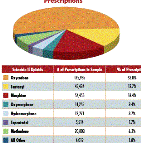
Changes in Schedule II & III Opioid Prescriptions and Payments in Calif. WC
An update to the CWCI analysis on the use of Schedule II painkillers in Calif workers' comp suggests that that the use of these drugs peaked later than initially indicated, with revised data showing Schedule II opioids fell from a record 6.7% of workers' comp prescriptions in the 2nd quarter of last year to 4.9% of the prescriptions in the 4th quarter.
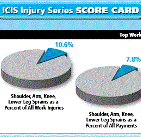
ICIS Injury Score Card: Sprain Injuries
The latest CWCI Injury Scorecard takes a detailed look at California workers' compensation claims involving shoulder, arm, knee, and lower leg sprains using data from 236,567 open and closed claims from AY 2001-2011.
Twenty-Four Hour Coverage: Mandating Medical Coverage for California Employees
This study documents the size and structure of health and disability benefit systems in the mid-1990s and projects the impact of mandating medical coverage for all California employees and their non-working dependents.
Twenty-Four Hour Coverage: Evaluating Potential Sources of Costs and Savings
This study sets the parameters for potential medical savings that could result from a mandated expansion of group medical managed care into workers' compensation.