
Press Release
CWCI Study Tracks the Changing Mix of Workers' Comp Drugs as Opioid Use Declines
Oakland–Opioids remain the most common type of prescription drug used to treat California injured workers with lost-time injuries, but sustained efforts to curb their use are paying off as new data show that in the past decade they fell from about a third of indemnity claim prescriptions to less than a quarter, while there was a concurrent increase in anti-inflammatories and anticonvulsants which are often used as opioid alternatives.
A new study by researchers at the California Workers’ Compensation Institute (CWCI), based on data from 12.5 million prescriptions dispensed to California injured workers from 2007 to June 2017, measures changes in the prescription and payment distributions among major therapeutic drug groups used in indemnity claims, then takes an in-depth look at the trends in the volume, cost, potency and types of opioids used. The authors found that although opioids remained the top drug group prescribed to workers with lost-time injuries, over the span of the study their share of indemnity claim prescriptions declined from a record 32.1% in 2008 and 2009 to 23.2% in 2017, while their share of the prescription payments fell from 30.5% to 18.6%. As in prior research, the new data show the decline in opioid use accelerated in 2012, which tracks with tighter scrutiny by utilization review and independent medical review programs; restrictions by payors, pharmacy benefit managers, and medical provider networks; and increased physician and public awareness of opioid risks.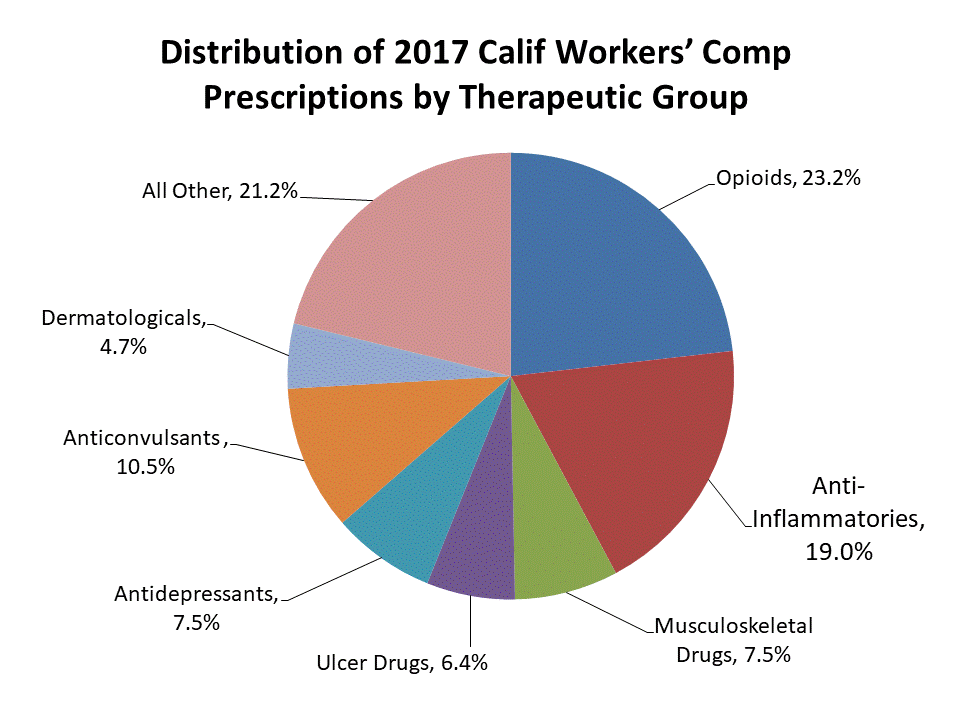
The 2017 data show that while opioid use has dwindled, both anti-inflammatories and anticonvulsants now account for increased shares of indemnity claim prescriptions, while dermatological drugs had the biggest increase in payments, more than doubling from 6.9% of the 2008 drug spend to 16.1% of the 2017 payments, largely due to the growing prevalence of high-cost dermatological creams. As for the opioids, the study found they have become less prevalent in the early stages lost-time claims, which bodes well for the future as historically the percentage of claims involving opioids shows little change beyond one year post injury. The study also shows that the total number of morphine equivalents (MMEs) dispensed per opioid user at different levels of claim development has declined sharply since accident year 2012, though looking at the development data on claims from each accident year show that when opioids have been used to treat chronic pain, the average strength per opioid prescription has continued to increase over time, often doubling between 3 months and 60 months post injury, underscoring the importance of weaning injured workers off of these drugs. In addition to the prevalence, payment and potency trends, the study also examines brand vs. generic opioid drug trends, as well as changes in the prescription and payment distributions for the most common opioids, based on drug ingredient.
CWCI has published its study in a Research Update report, “California Workers’ Comp Prescription Drug Distributions & Opioid Trends.” CWCI members and subscribers can access the report at www.cwci.org and others can purchase it at the Store.