
Press Release
Prevalence of Opioids in California Workers Comp Holding At Near-Record Highs
Despite efforts to curb the use and cost of opioids in California workers’ comp, new CWCI research finds the use of these drugs has remained at record levels since 2010, that virtually the same 3% of high-volume Schedule II opioid prescribing doctors continue to write more than half of the prescriptions, and that nearly half of the prescriptions are for minor injuries where medical evidence does not clearly support Schedule II opioid use.
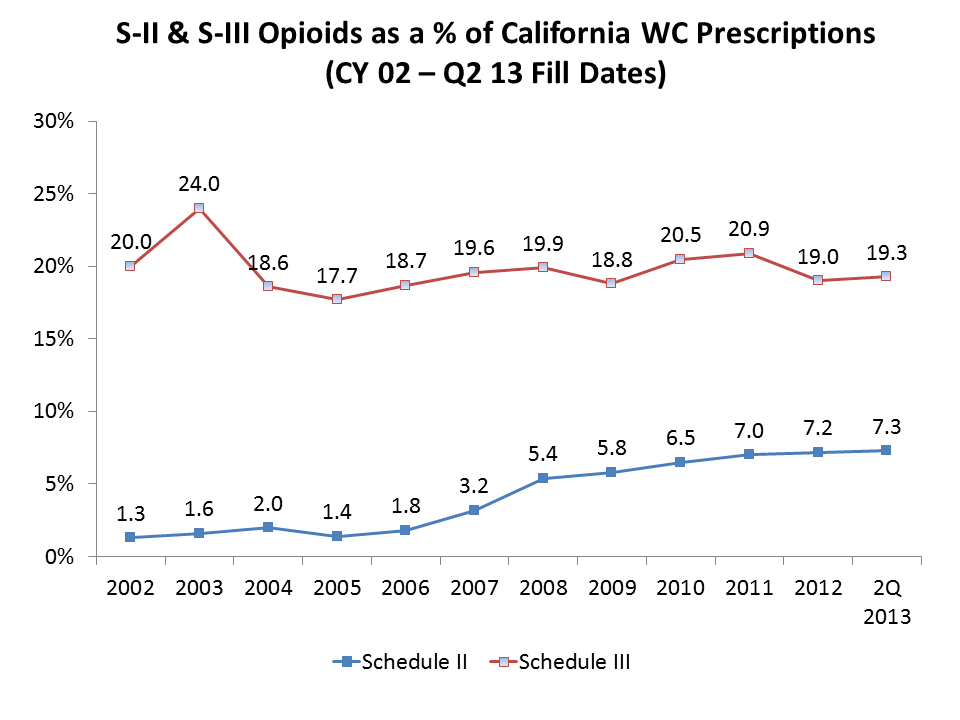
The CWCI study used data from a large sample of prescriptions dispensed to California injured workers from 2002 through mid-2013 to measure the utilization and payment trends for Schedule II opioids such as Oxycodone, Morphine and Fentanyl, and less potent, but still potentially addictive Schedule III opioids (primarily Vicodin). The results show that except for a brief dip following the enactment of workers’ compensation reforms in 2004, use of the Schedule II opioids has climbed steadily, increasing nearly six-fold from 1.3% of all workers’ comp prescriptions in 2002 to a record 7.3% in the first half of last year. Though the growth rate for Schedule II opioids has plateaued since 2010, utilization remains at an all-time high. As a result, since 2005, payments for these painkillers have increased from about 4% to nearly 20% of all California workers’ compensation prescription dollars. In contrast, after hitting a post-reform low in 2005, use of Schedule III opioids has been far more consistent, with these drugs accounting for about 20% of the prescriptions dispensed to injured workers and around 10% of the prescription dollars over the past decade.
In addition to examining the utilization and payment trends, the study also followed up on prior research that had used 2010 prescription data to identify Schedule II opioid provider patterns. The updated analysis, based on Schedule II prescriptions filled between 2012 and mid-2013, found that as in the earlier study, the top 3% of doctors who prescribed Schedule II opioids wrote more than half (53%) of the Schedule II opioid prescriptions, that more than 8 out of 10 doctors who ranked among the top 3% of prescribers in 2012/13 were also in the top 3% of prescribers in 2010, and that nearly half of all Schedule II opioids dispensed to injured workers in the latest sample were still prescribed for relatively minor injuries such as sprains and strains, where the use of opioids is not clearly supported by clinical evidence.
CWCI plans to continue to research issues surrounding the use of opioid painkillers in workers’ compensation, with an upcoming study examining the potential impact of adopting a prescription formulary for California workers’ compensation. In the meantime, the CWCI Research Update report detailing the Schedule II and III opioid utilization and payment results, including breakdowns by drug type and an analysis of the Schedule II opioid prescriber patterns has been posted in the Research section of the Institute’s website, www.cwci.org.