Research
MPN Utilization in California Workers' Compensation
New CWCI Research finds that the use of network providers to deliver medical services to injured workers, which rose sharply following the introduction of MPNs, has continued, albeit at a slower pace, as has the growth in the percentage of medical dollars flowing to network providers.
The Cost and Utilization of Compound Drugs, Convenience Packs and Medical Foods in California WC
A new CWCI study on Calif. workers' comp prescriptions shows the use of compound drugs, medical foods, and "co-packs" that combine prescription drugs and medical foods, increased sharply in the 2nd quarter of 2007 – coinciding with state regulators' crackdown on physician-dispensed repackaged drugs.
Percentage of Calif. WC Prescriptions Falling Outside the Medi-Cal Fee Schedule Database
A CWCI study finds that most injured worker prescriptions in California are in the Medi-Cal fee schedule database that sets maximum reasonable pharmacy fees and helps control workers' comp costs, suggesting that other factors such as an increase in the number of scripts/claim, increases in Average Wholesale Prices used to calculate pharmacy fees, a shift toward more expensive drugs, and PBM contract rates and payments that exceed fee schedule allowances, may be responsible for recent growth in prescription drug costs.
Public Self-Insured Claims Experience in California WC FY 1999 – 2010
California public self-insured losses continued to mount last year, despite declining claim volume, as claim severity (average loss per claim) increased for the fourth year in a row.
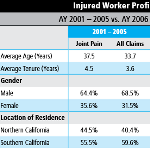
ICIS Injury Score Card: Joint Pain
CWCI's latest Injury Score Card provides detailed data and graphics on California work injury claims involving degenerative, infective and metabolic joint disorders. Members and subscribers may log in to view the full Score Card and summary Bulletin.
Medical Development Trends in California WC, AY 2002-2011 Claims
Updated figures from CWCI research show continued growth in average amounts paid for medical services in California workers' comp, with payments for treatment, prescriptions and durable medical equipment, med-legal reports and medical management all trending up.